Improving cross-functional collaboration and eliminating redundant revision cycles by shifting from reactive gatekeeping to shared design systems and structured rituals.
The Breaking Point
At Sleeper, marketing campaigns, promotional events, and product visuals depended on fast-turnaround production across motion graphics, 3D assets, and other deliverables. However, rapid feature expansion and frequent promotions created significant operational friction among marketing stakeholders, product design, and the art team.
For weeks before major season launches, the art team routinely worked late into the night to meet deadlines. Recognizing that this pace was unsustainable for the design team, I was tasked with improving the overall art production process. Through one-on-one interviews with artists, the design director, and marketing partners, I identified three recurring sources of friction:
Sleeper's game and promo rules are highly nuanced. Without sufficient product context, artists often struggled to meet marketing goals—a challenge compounded by legacy briefs that routinely omitted critical requirements during busy seasons.
To bridge this gap, the artists relied heavily on the product designer responsible for the featured vertical to step in. Product designers had to build custom UI mockups, verify complex player stats, and fact-check assets while juggling their own product roadmaps.
Sleeper regularly updated its visual identity and UI patterns, but without a formal process for communicating those changes, artists often worked off outdated screen references. This led to avoidable style discrepancies and late-stage rejections during final reviews.
Key Takeaway
Guiding Principles
Top-down mandates rarely change team behavior. Based on the key frictions, the art team and I brainstormed and co-designed the operating framework together. To ensure the system didn't depend on a single gatekeeper, I delegated specific library domains to individual artists based on their strengths (e.g., motion patterns, 3D assets, and marketing cards) and held them accountable for maintaining their respective sections.
Three core rules anchored every decision, each answering one failure mode:
Solutions
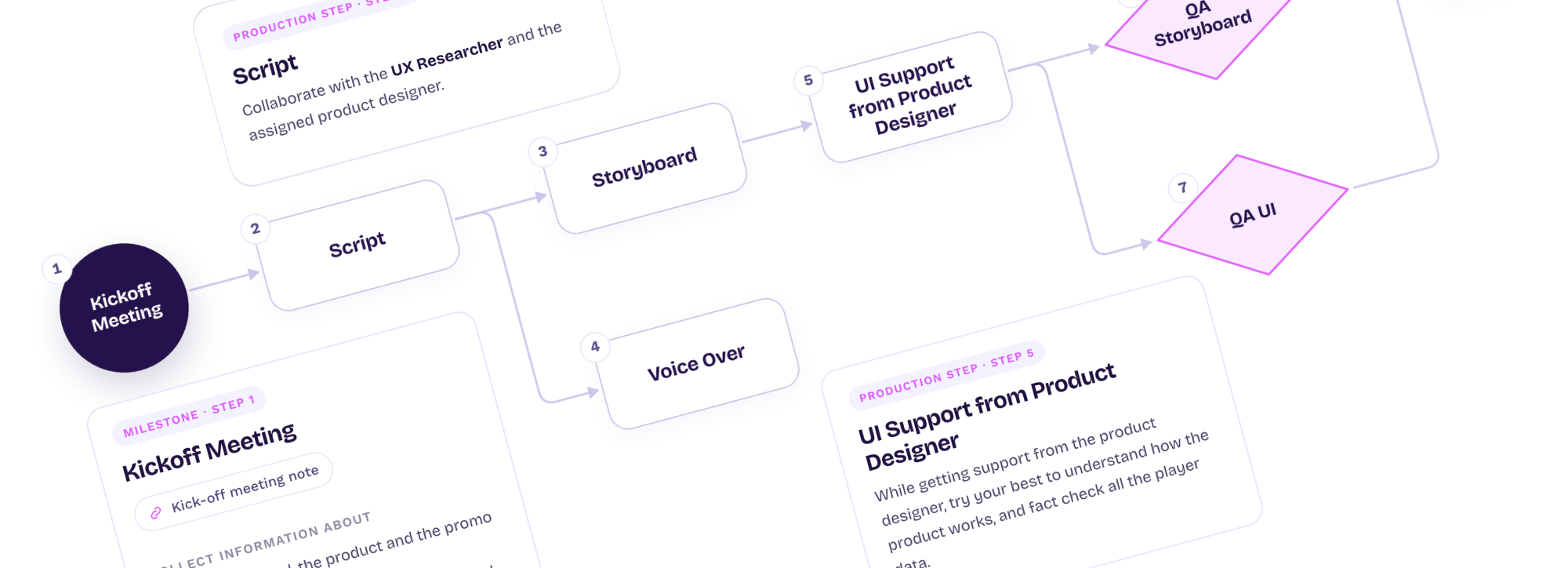
To eliminate guesswork and pinpoint where errors occurred, I worked with a motion graphic designer (credit: George Ahlmeyer) to map our production process from start to finish. The interactive blueprint captured the dependencies among marketing requests, product designer UI handoffs, and multi-stage QA gates across both motion and static workflows.
01
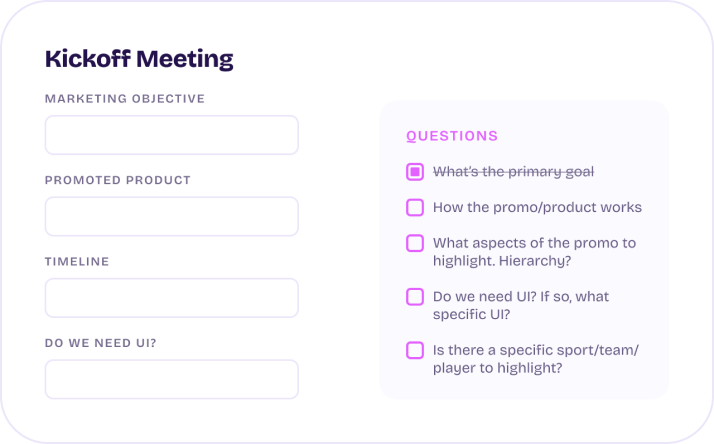
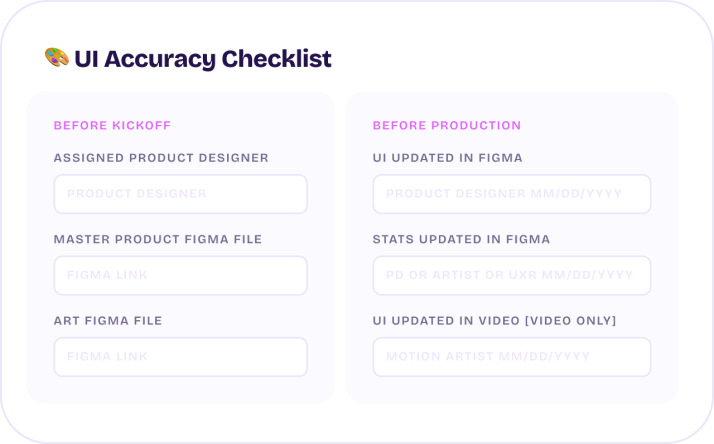
Mandatory kickoff briefs aligned the team on product goals, promotional mechanics, featured players and sports, and required UI surfaces before production began. Pre-handoff UI and stats checklists helped artists and product designers catch errors before UI moved into animation production, rather than during animation or rendering.
02
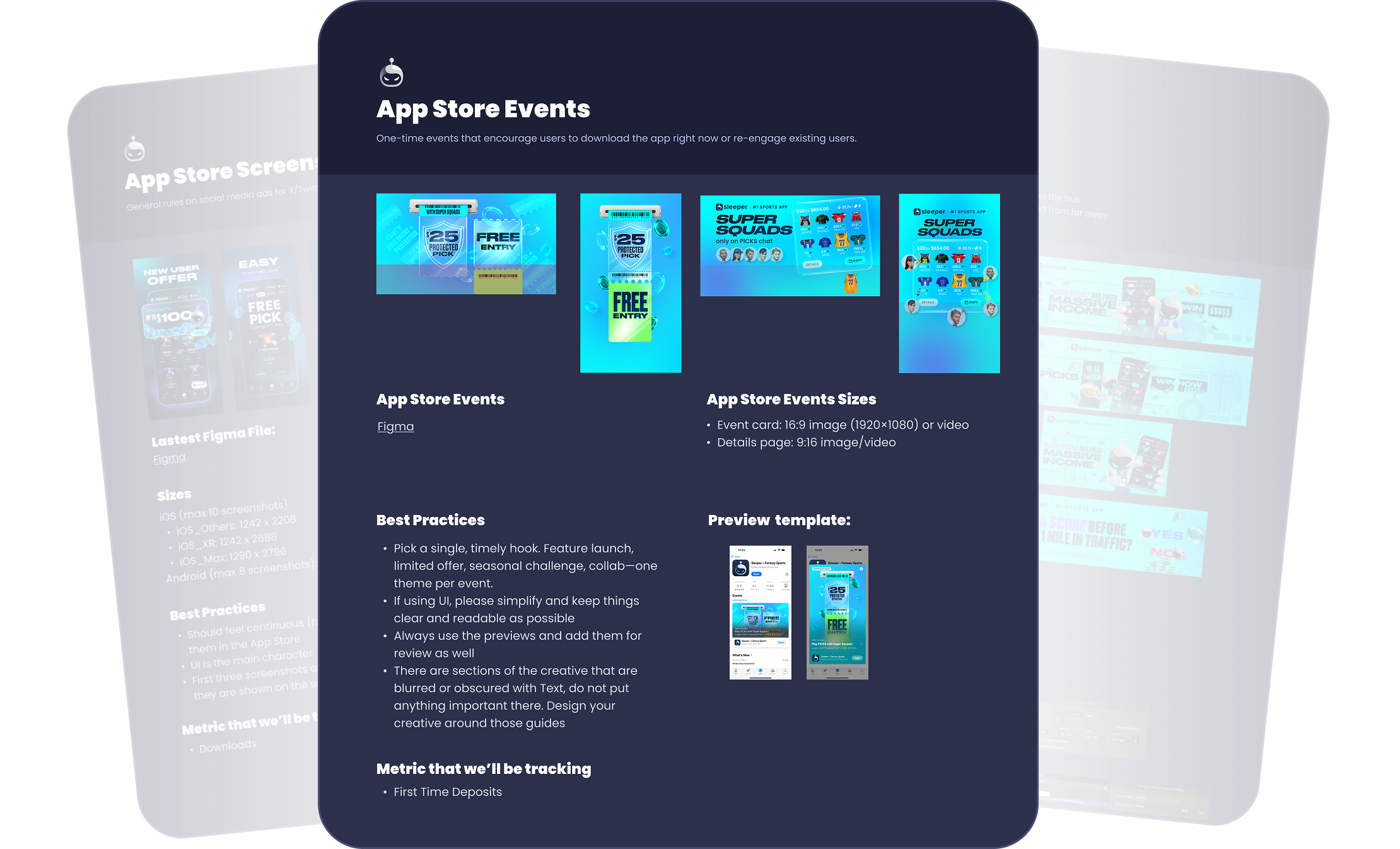
Built a living Figma design library synchronized with product tokens, dividing ownership across the team:
03
Established a dedicated Weekly Art Team Co-Working Session anchored around a lightweight, three-part agenda:

Update work progress and any new implementations.

Share current bottlenecks and any working practices.

Collaborative document updates.
Early Impact
By shifting alignment and fact-checking upstream, the new framework delivered tangible operational clarity:
Verifying product data during kickoff and storyboard stages prevented costly, late-stage asset re-renders.
Structured kickoffs gave artists the foundational product literacy needed to execute product features independently.
Equipped artists with the methods and tools to verify live player stats and UI data, reducing reliance on product designers and building team confidence.
Delegating ownership of library components turned the team from passive guideline users into active stewards of Sleeper's visual standards.